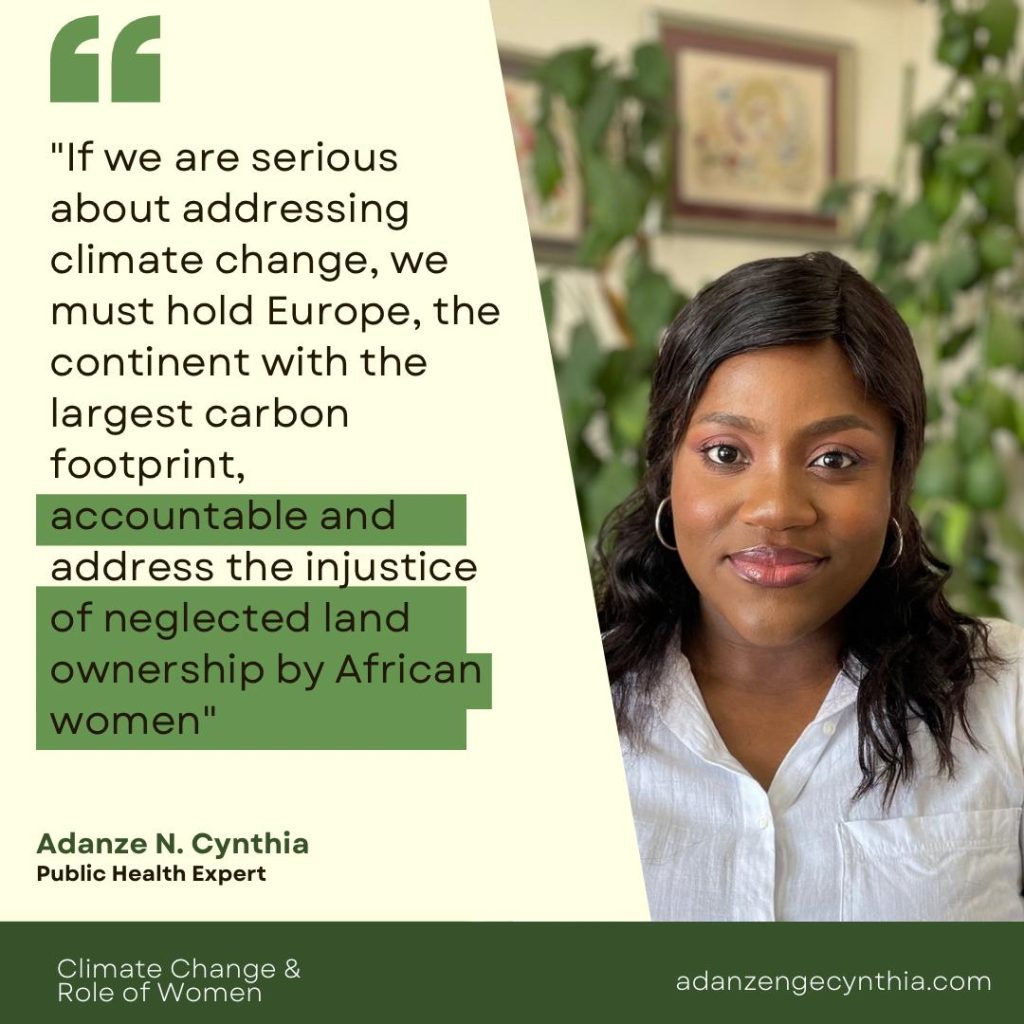
‘‘If we are serious about addressing climate change, we must hold Europe, the continent with the largest carbon footprint, accountable and address the injustice of neglected land ownership by African women’’ Adanze N. Cynthia
In the intricate tapestry of global challenges, climate change emerges as a formidable foe, presenting African nations with a particularly daunting crisis. But what often goes unnoticed is the profound role played by European influence in exacerbating this climate emergency on the African continent.
A legacy of colonisation and ongoing exploitative practices have left indelible scars on Africa. European powers, driven by an unquenchable thirst for resources and economic dominance, continue to exploit Africa’s natural riches, wreaking havoc on the environment in the process. Whether it’s the extraction of minerals, rampant deforestation, or unsustainable agricultural practices, the fingerprints of European exploitation are unmistakable in Africa’s worsening climate crisis.
Most European nations and companies have deforested large swathes of Africa, including the Congo Basin, home to the world’s second-largest tropical rainforest. The demand for timber, palm oil, and other agricultural products, mining, and infrastructure development are driving this deforestation. In the Democratic Republic of Congo, vast tracts of rainforests have been cleared for logging and mining operations, with little regard for the environmental consequences. In Ghana, large-scale illegal logging has ravaged extensive forests, leading to environmental degradation and biodiversity loss.
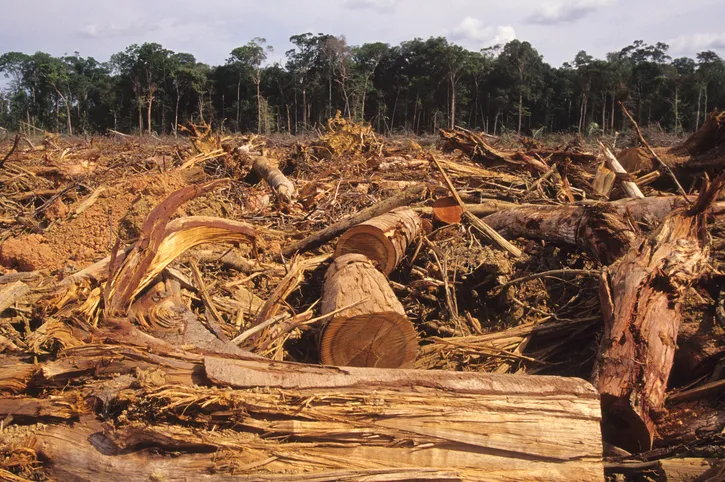
Copyright: luomanhttps://images.app.goo.gl/5YVEBi2TKgTcE3o7A
Moreover, many African countries are heavily reliant on mining and fossil fuel production due to Europe’s historical exploitation of their natural resources. These industries contribute significantly to greenhouse gas emissions and pollution, aggravating the impact of climate change on the continent. Nigeria, Angola, and Equatorial Guinea, for instance, are heavily dependent on oil exports, and numerous European companies are involved in extracting and exporting these resources. The resulting air and water pollution, coupled with habitat destruction, have had devastating effects on local communities and ecosystems.
Africa, known for its minimal carbon footprint, is disproportionately affected by climate change, experiencing unpredictable weather patterns, extended droughts, and severe weather events that disrupt traditional farming practices. The changes have a direct impact on food security, worsening the existing challenges in a continent where agriculture is crucial to many economies.
In Africa, the sun was once a benevolent force, nurturing life and providing a playground for children. Currently, it seems more like a foe, turning fields into barren wastelands and hinting at hunger. This story goes beyond climate change; it highlights an unjust system where the most vulnerable bear the brunt of a problem they had little to do with creating.
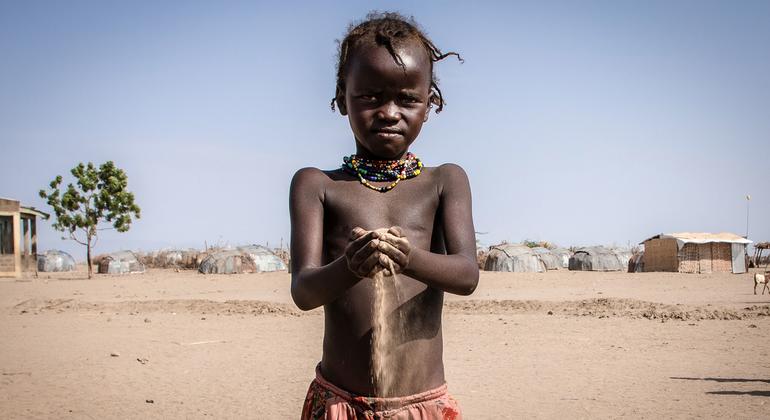
The saying often goes that sisterhood knows no borders. However, when it comes to climate change, it’s evident that the impact is not distributed equally among women. In Africa, the landscape is evolving – experiencing more frequent floods, drying up, and becoming unpredictable in its productivity. It’s important to recognise that the global impact of this issue disproportionately affects African women, who play a crucial role in our rural communities.
As temperatures rise and weather patterns become more erratic, women in Africa are on the frontlines of this crisis, facing challenges in securing food, water, and fuel for their families. Traditional gender roles often place the burden of gathering resources and nurturing the household on women, making them particularly vulnerable to the effects of climate change.
The footprint of rich nations on Africa’s climate change-induced famine is clearly visible. Europe is among the top contributors to greenhouse gas emissions due to their reliance on burning fossil fuels for prosperity. This is the primary reason behind climate change – a rise in the Earth’s temperature due to human activities. Africa, the continent that has contributed the least to this situation, is now experiencing the full force of its effects despite being impacted the most. Unpredictable weather patterns such as heavy rains, increasing sea levels, and extreme heat are causing disruptions to conventional farming methods, putting food security at risk for millions, particularly in rural regions.
It’s important to remember that floods and droughts bring about various public health challenges to an already fragile health system. These include challenges in accessing healthcare facilities, particularly services like maternal care for pregnant women, a higher incidence of waterborne diseases such as cholera, an increase in vector-borne diseases like malaria, and a rise in respiratory infections just to name a few.
As the climate crisis intensifies, African nations find themselves caught in a vicious cycle. The impacts of climate change intensify existing vulnerabilities, which in turn make communities less resilient to future shocks. This perpetuates a cycle of poverty, food insecurity, and poor health outcomes, disproportionately affecting women and children.
And that’s not all. Across various regions in Africa, women who play a crucial role in farming do not have guaranteed land ownership rights. In numerous African societies, women face limitations in their ability to access and own land due to historical and cultural influences. Moreover, outdated customs and unjust regulations frequently confine them to supporting roles on property controlled by male family members. The absence of land ownership hinders their capacity to adapt to climate change. They are unable to make investments in new farming techniques, grow drought-resistant crops, or obtain the necessary resources to enhance their yields. It’s akin to providing them with a damaged tool and expecting them to cultivate a dry field.
This situation has serious repercussions. During times of reduced food production caused by climate change, women, who are often in charge of providing meals for their families, are usually the first to experience hunger. This results in malnutrition, especially in children, which weakens their immune systems and increases their vulnerability to diseases. This cycle is relentless, as a shifting climate undermines our communities, beginning with the women who are the backbone of society.
The impacts of climate change on African women extend beyond food insecurity. Increasingly erratic weather patterns also affect their access to water, a resource they are traditionally responsible for collecting. As droughts become more frequent and severe, women and girls must travel longer distances to find water sources, often putting their safety at risk and limiting their opportunities for education or income-generating activities.
Looking Beyond Quick Fixes: Proposals for a Long-Term Future
There are numerous strategies that can be implemented to combat the increasing impact of climate change in Africa, promote gender equality, and ensure accountability for major polluters.
Ensuring legal reforms that provide women with equal land rights is a crucial step in tackling the issue of climate change. It is crucial for governments to implement and uphold laws that break down discriminatory practices and guarantee fair access to and ownership of land. We must strongly advocate for women to have ownership rights over land. When individuals have secure ownership, they can make informed decisions about their land, invest in sustainable practices, and adapt to changing weather patterns. It is also important to support women-led organisations focusing on climate change adaptation and food security in your communities.
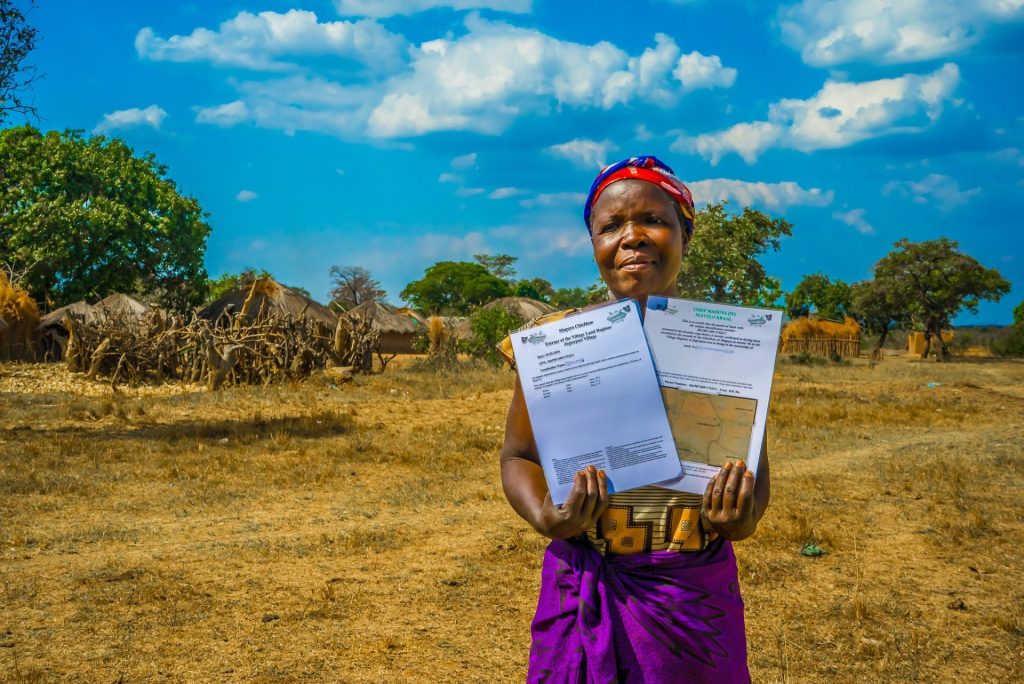
It’s crucial to provide African farmers with the necessary training and resources to adjust their farming techniques in response to climate change. Training covers drought-resistant crops, water conservation techniques, and soil health management. Embracing innovation through the exploration and adoption of new technologies, such as drought-resistant seeds and solar-powered irrigation systems, is also key.
Climate finance is another critical component in addressing the impacts of climate change in Africa. Developed nations, whose historical emissions have significantly contributed to the crisis, must fulfil their commitments to providing financial assistance to support adaptation and mitigation efforts in vulnerable regions. These funds can be channelled towards climate-resilient infrastructure, early warning systems, and sustainable agriculture projects, empowering local communities to build resilience.
It is imperative for Africans to come together and insist that affluent nations, who are the primary culprits behind climate change, take responsibility for their actions. Providing support for mitigation and adaptation efforts in Africa is of utmost importance. It is crucial that Africans are provided with equitable representation at significant gatherings, enabling them to voice their concerns and advocate for sustainable measures to address climate change on the continent. An effective approach to this issue involves fostering international collaboration to redress the historical injustices resulting from European influence. Developed nations have a vital responsibility to support African countries in tackling and adjusting to climate change, acknowledging their shared obligation.
African leaders must take a resolute stance in safeguarding the remaining natural resources through the enforcement of stringent legislation to regulate deforestation and curb the rapid proliferation and concentration of enterprises in urban regions, which contribute to environmental pollution and pose risks to the well-being of nearby inhabitants.
Ultimately, it is crucial to acknowledge the complex interrelationships among climate change, historical inequities, and gender disparities as we progress. By dismantling gender barriers to land ownership, providing assistance to women in agriculture, and addressing the enduring consequences of European colonisation, Africa has the potential to establish a resilient and prosperous future. Immediate action is imperative to establish a global society that combines climate justice and gender equality, fostering a harmonious connection with our planet.
It is therefore crucial to acknowledge that when a woman has both access to a parcel of land and the ability to cultivate it, she not only ensures the provision of food for her family but also makes a long-term investment in the development of Africa.